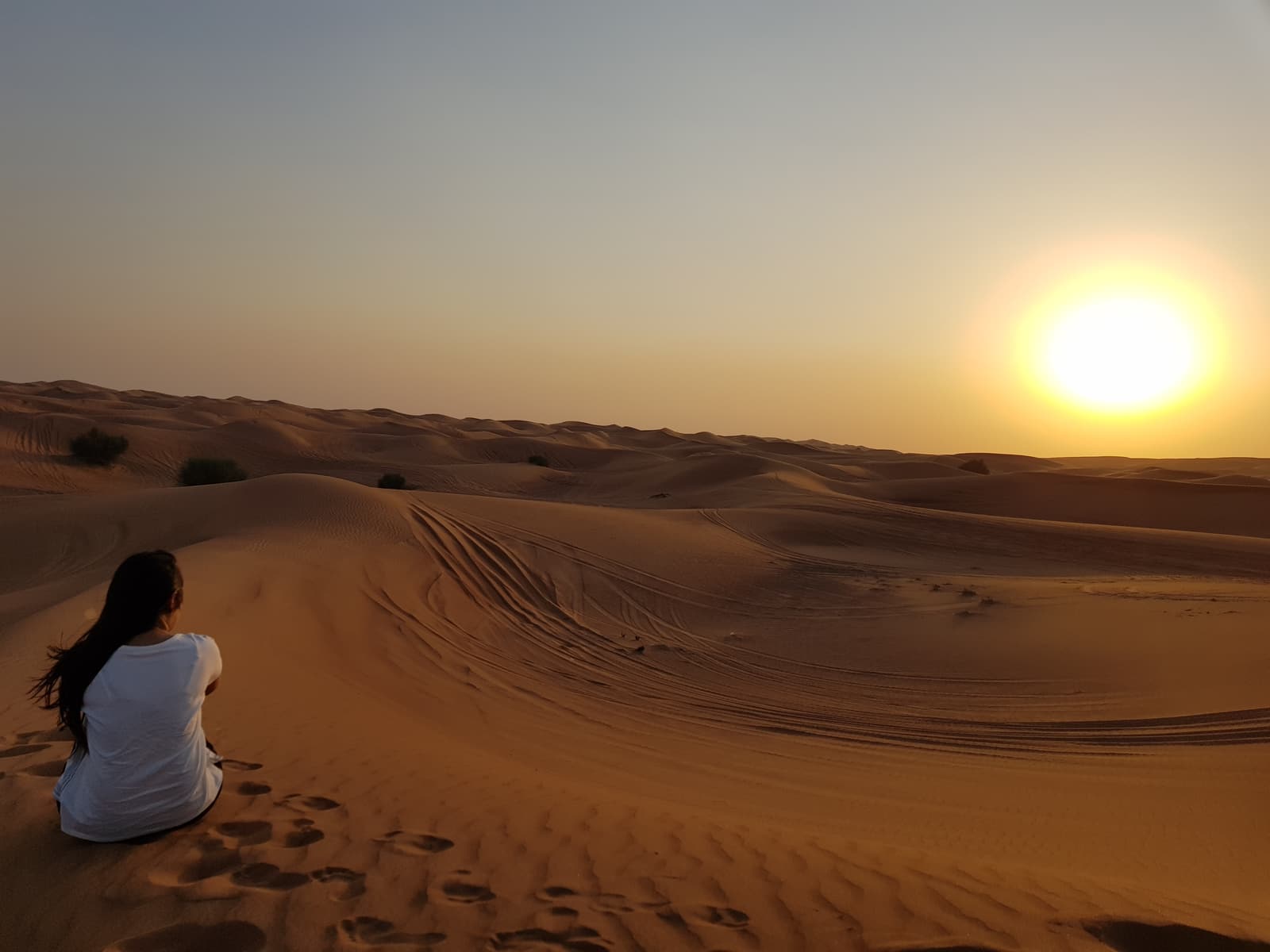
Desert safaris run every day of the year, but the experience changes completely with the season. The short answer: November to March is best, October and April are good, and from May to September you should go at sunrise or after sunset, or choose something indoors.
The year at a glance
Temperatures below are typical daytime highs for the Abu Dhabi area and are approximate; the desert interior runs hotter by day and cooler by night than the coast.
| Months | Typical daytime high | Safari conditions | Our advice |
|---|---|---|---|
| December–February | About 24–26°C | Mild days, cool to cold evenings, clear light. Peak season. | Ideal. Book ahead and bring a jacket. |
| March | About 28–30°C | Warm and pleasant; occasional wind. | Excellent. |
| April | About 33–35°C | Hot afternoons, comfortable evenings. | Good — choose evening or sunrise. |
| May | About 38–40°C | Hot. Sand burns bare feet by day. | Sunrise or evening only. |
| June–August | About 41–44°C or more | Extreme heat; humid nights near the coast. | Sunrise trips or short evening tours; consider indoor sights. |
| September | About 39–41°C | Still very hot, easing late in the month. | Sunrise or evening only. |
| October | About 35–36°C | Hot days, pleasant evenings returning. | Good for evening safaris. |
| November | About 30°C | Warm days, lovely evenings. | Ideal. |
Winter: November to March
This is why people come. Afternoons are warm enough for shirtsleeves, the sand is comfortable underfoot, and the low sun gives the dunes their colour. After dark the desert cools quickly — in December and January it can drop to the low teens Celsius or below out in the sand, and it feels colder in an open camp. Overnight campers need proper warm layers.
It is also the busiest period, especially around Christmas, New Year and school holidays. Book a few days ahead, expect fuller camps, and consider a private tour if crowds bother you. Winter is the season for camel racing at Al Wathba and, around late December and early January, the Liwa festival at Moreeb Dune.
Summer: May to September
The heat is not a detail. Daytime highs above 40°C are normal, the sand becomes too hot to walk on barefoot, and near the coast the humidity makes evenings sticky. Operators adapt: evening pickups move later, activities are shortened, and the 4x4s are air-conditioned. Camps are open-air, so dinner is still warm even after sunset.
If you visit in summer, the best choices are a sunrise safari, a short evening safari, or skipping the dunes in favour of the indoor parks of Yas Island, the Louvre Abu Dhabi and the Falcon Hospital. Drink far more water than you think you need, and do not take small children or older relatives into the midday desert. The upside: prices and crowds are at their lowest.
Morning, evening or sunrise?
- Evening gives you sunset, the camp, dinner and shows. Best from October to April.
- Morning is shorter and cheaper, with good light early on. Fine in winter; in summer it gets hot fast after 9 am.
- Sunrise is the coolest and quietest option all year, and the smart one in the hot months.
Ramadan
Safaris continue during Ramadan with dinner after sunset, no belly dance and no alcohol; camps are quieter. See the notes in the buyer’s guide. The Eid holidays that follow are, by contrast, very busy.
Wind, rain and fog
Rain is rare and brief, mostly between December and March; operators may cancel or reschedule after heavy rain. Windy days — more common in late winter and spring — raise blowing sand that stings and reduces visibility; a scarf and sunglasses help. On winter mornings dense fog can settle on the highways and delay sunrise and morning departures. Reputable operators cancel in unsafe conditions and refund you.
Best days and booking ahead
The UAE weekend is Saturday and Sunday, with Friday afternoon effectively part of it. Monday to Thursday evenings are calmer at the camps. In peak season book three to seven days ahead for the best-reviewed tours; at other times a day or two is normally enough. Compare dates on the safaris page.