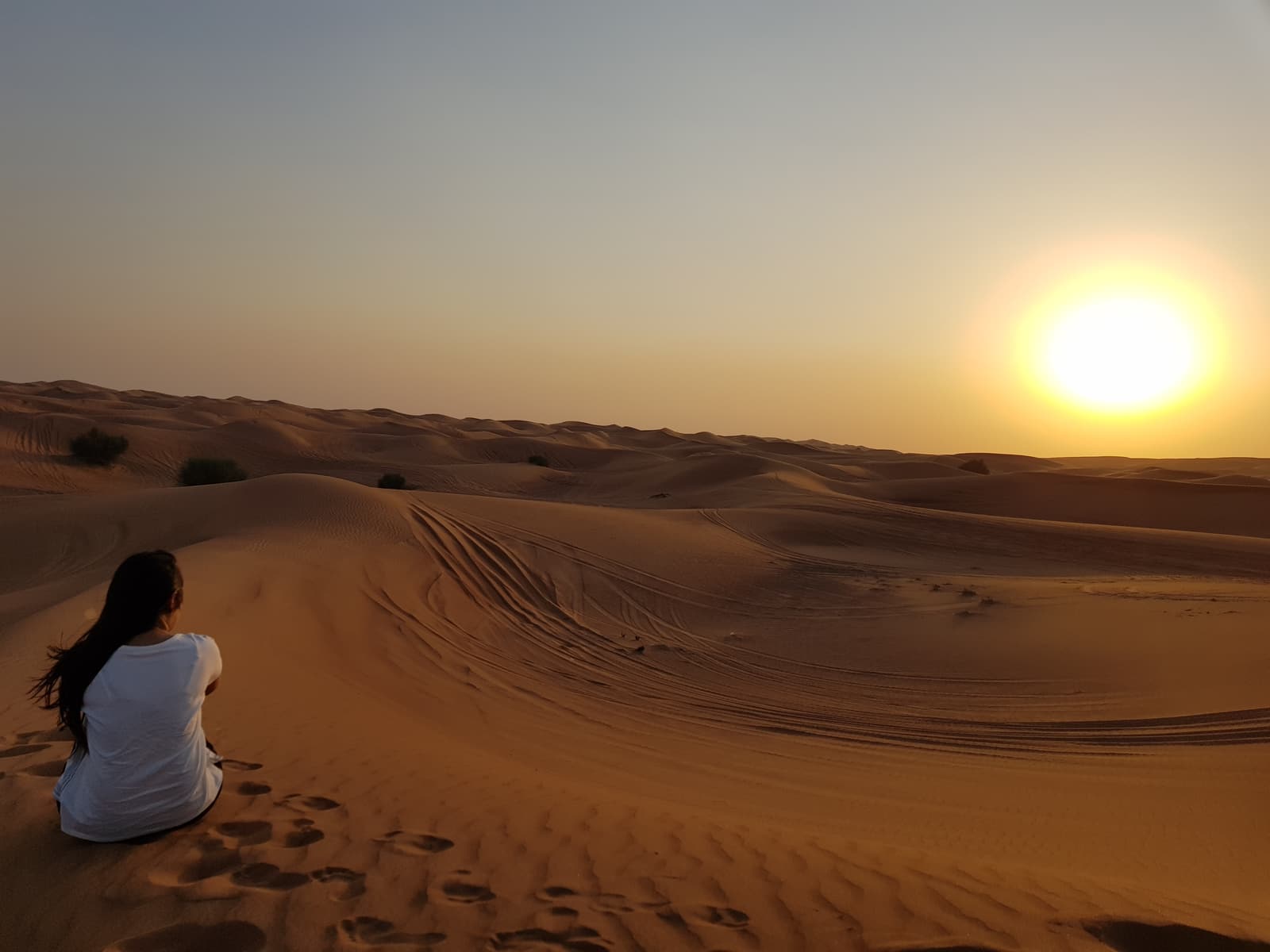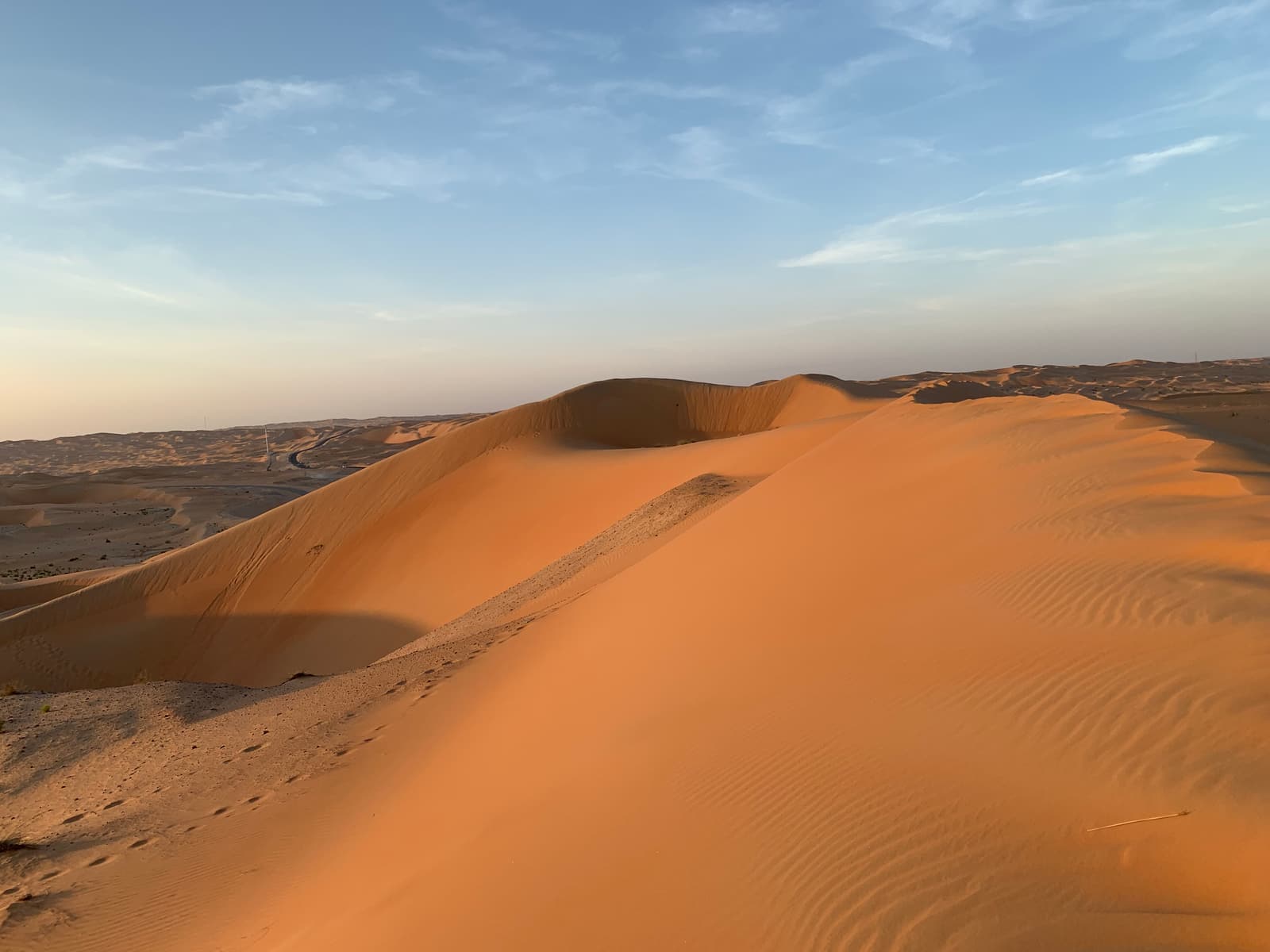
Every Abu Dhabi safari brochure shows the same photograph: a white 4x4 on an orange dune. The products behind it differ more than the pictures suggest. This guide sets out the types, what you really get, what it should cost and how to choose.
First, what a “desert safari” is
In the Gulf the phrase means an organised excursion into the sand desert, normally half a day. It is an activity trip built around driving on dunes, not an animal-watching trip — you may see camels, and with luck a gazelle from the road, but that is not the point. Near Abu Dhabi the safaris run in the dunes of Al Khatim and Al Khazna, about an hour east of the city.
The main types, compared
| Type | Typical timing | What you get | Best for |
|---|---|---|---|
| Morning dune bashing | About 8 am–1 pm | Dune drive, sandboarding, camel ride; quad bikes often extra. No dinner or shows. | Short stays, cruise days, hot months |
| Evening safari with BBQ & shows | About 3 pm–9.30 pm | Dune drive, sunset stop, camp activities, buffet dinner, tanoura and fire shows. | First-timers in the cool season |
| Sunrise safari | Pre-dawn–mid-morning | Dune drive and first light; sometimes breakfast. | Photographers, summer visitors |
| Overnight camping | Afternoon–next morning | Evening safari plus a night in a tent or camp bed, sunrise, breakfast. | Stargazers, families with older children |
| Private / VIP | Flexible | Your own vehicle and driver; sometimes a private dinner set-up away from the shared camp. | Couples, special occasions, people who dislike crowds |
| Al Wathba (fossil dunes, salt lake) | 2–4 hours, late afternoon | A gentle visit with no dune bashing. | Pregnancy, small children, back problems |
| Liwa / Empty Quarter | Full day or overnight | The biggest dunes, Moreeb Dune, the oasis. Long drive. | Second-time visitors, drivers, photographers |
 Deserts & dunes
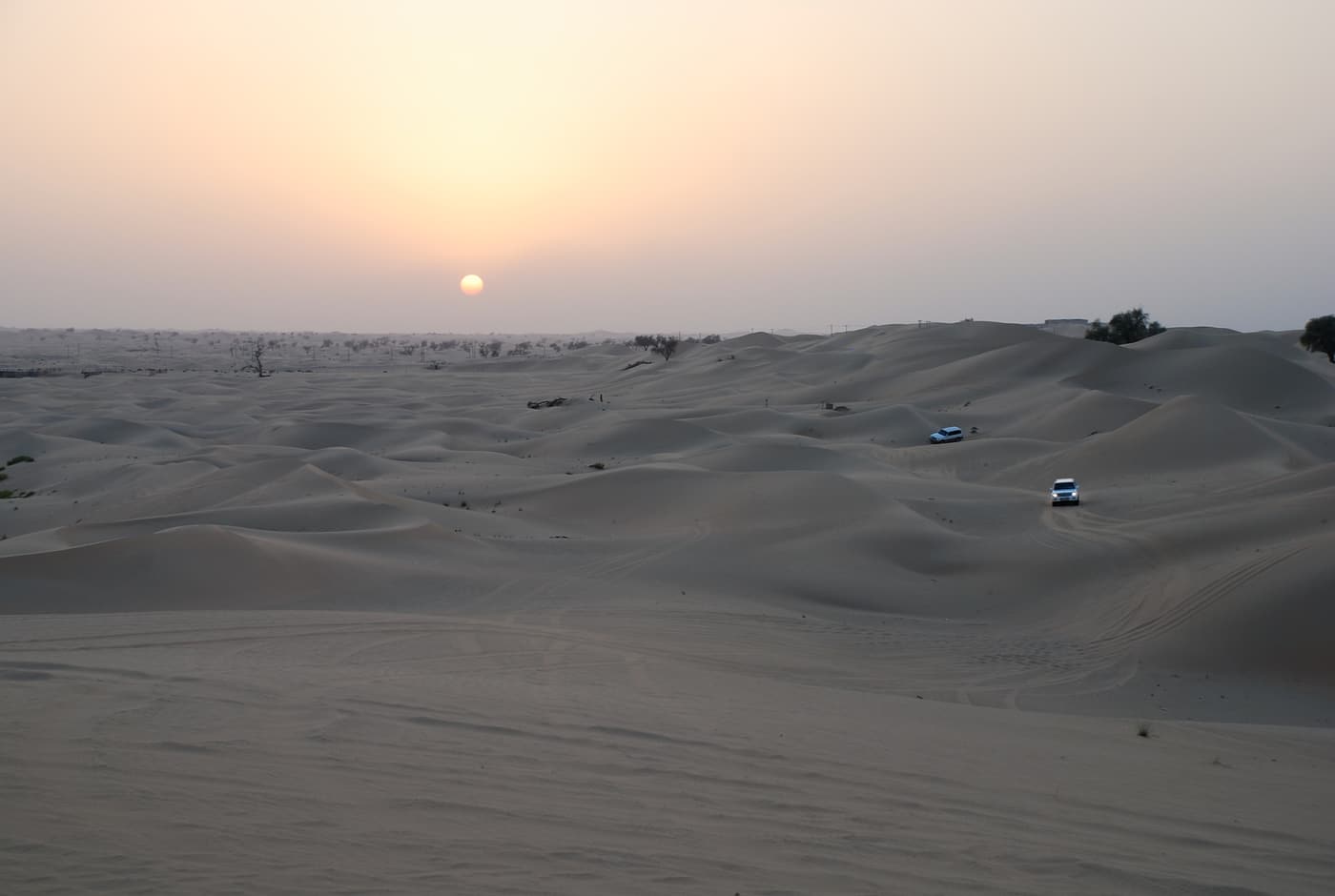
Al Khatim & Al Khazna Desert
Where most Abu Dhabi safaris actually happen
The rolling orange dunes between Abu Dhabi and Al Ain are the working heart of the safari business: close enough for a half-day trip, big enough for a proper dune drive, and dotted with the camps where evening safaris end with dinner.
 Deserts & dunes
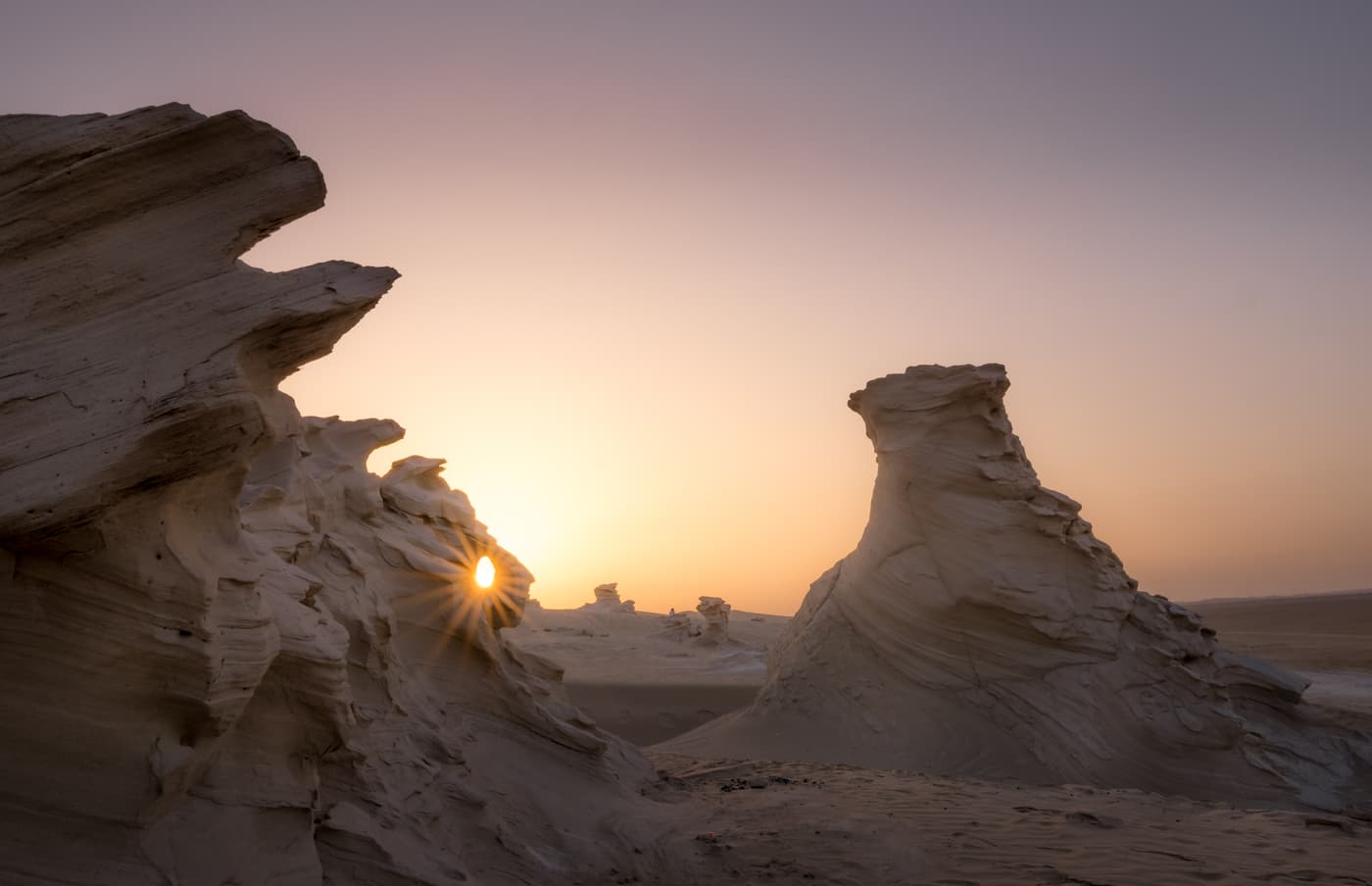
Al Wathba Fossil Dunes & Salt Lake
Wind-carved sculptures and a salt-crusted lake
A protected field of fossilised dunes — sand hardened over thousands of years and carved by the wind into strange frozen waves — with a short drive on to the man-made Long Salt Lake and its white salt formations. Free, easy and unlike any other desert stop near the city.
 Deserts & dunes
Liwa Oasis & Moreeb Dune
The edge of the Empty Quarter
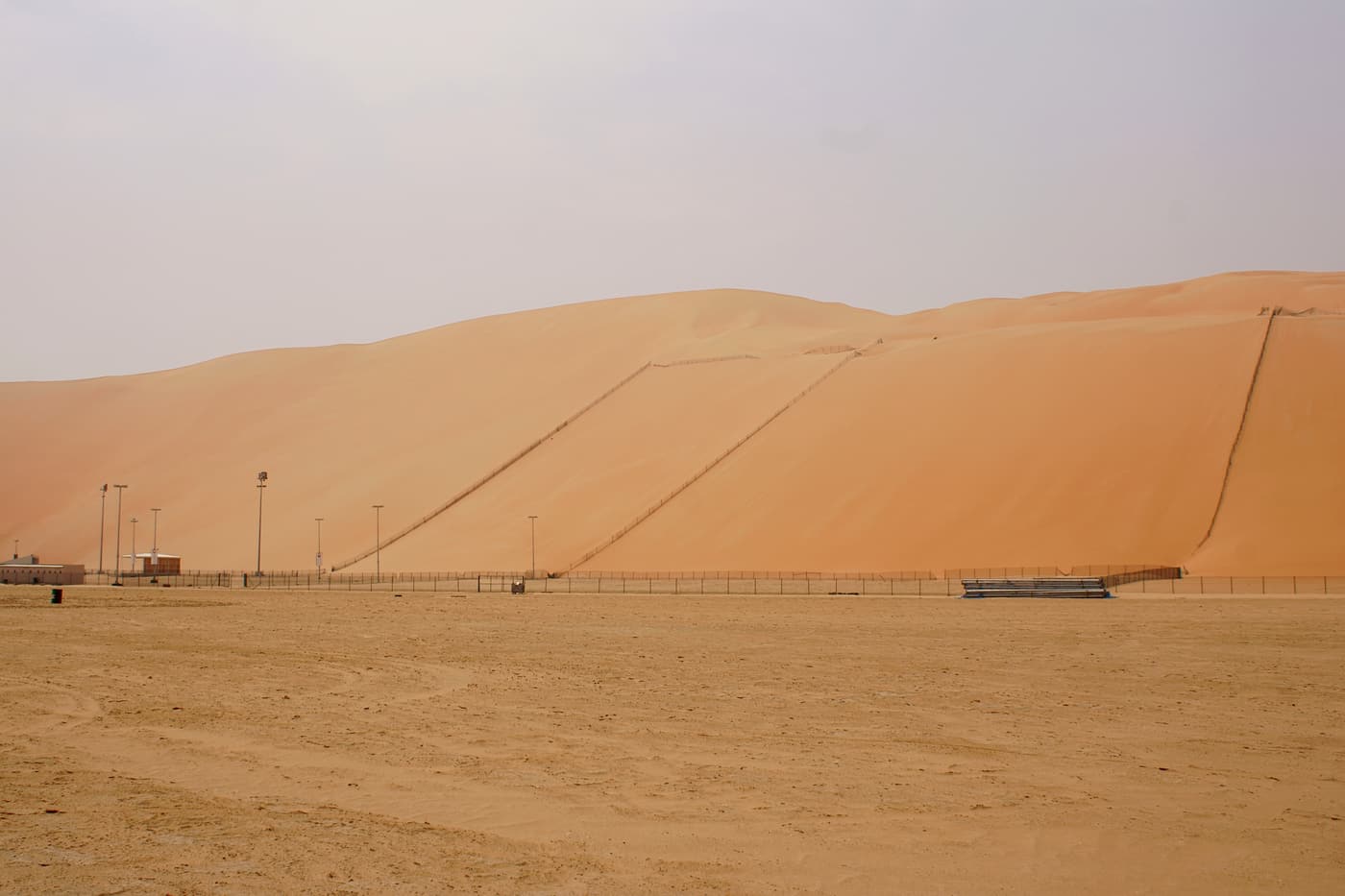
A hundred-kilometre arc of date-palm villages on the northern rim of the Rub’ al Khali, with some of the tallest dunes in the world behind them. Tal Moreeb, a wall of sand around 300 metres high, hosts the hill-climb races of the Liwa festival each winter.
 Deserts & dunes
Qasr Al Sarab
A fortress resort in the big dunes
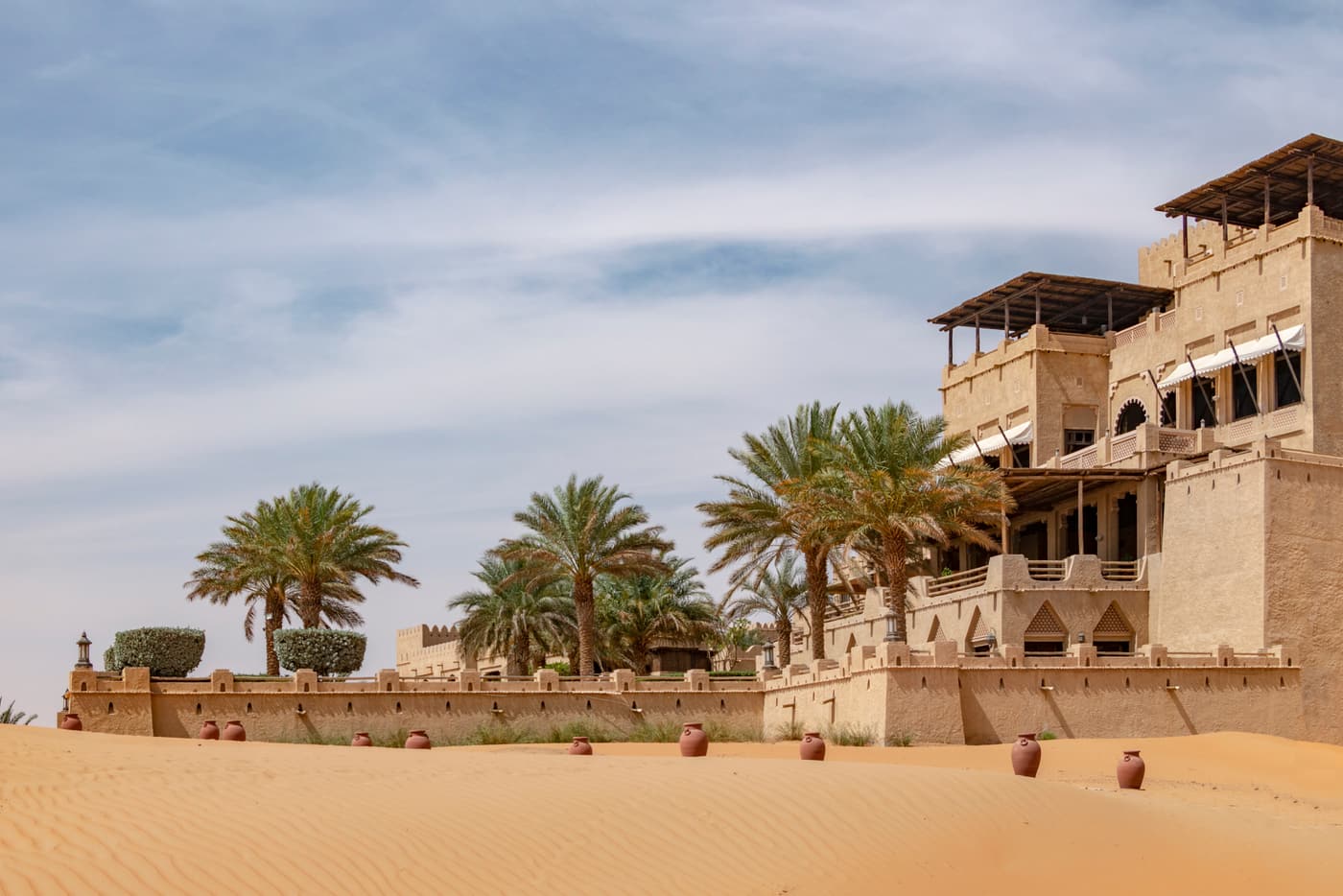
The Anantara desert resort built like an Arabian fort among the towering dunes of the Liwa desert — the most comfortable way to experience the Empty Quarter, with dune drives, camel treks and sunrise walks run from the hotel.
What is normally included
- Hotel pickup and drop-off in a 4x4 or minibus, within the operator’s zone — see pickup zones.
- Dune bashing: typically 20 to 45 minutes of driving on the dunes with a photo stop.
- Sandboarding: boards are provided at a dune near the camp; you carry them back up yourself.
- A short camel ride: usually a few minutes in a loop beside the camp — a photo opportunity, not a trek.
- Camp extras on evening tours: Arabic coffee and dates, henna painting, soft drinks and water, shisha in a designated corner (adults only), and the chance to try on local dress for photographs.
- Dinner on evening tours: a barbecue buffet of grilled meats, salads, rice and bread, with vegetarian dishes. Tell the operator in advance about dietary needs.
- Shows on evening tours: a tanoura dance (a spinning performer in a weighted, illuminated skirt), a fire show and usually belly dance. Belly dance is paused during Ramadan, and entertainment may be reduced on certain religious dates.
What usually costs extra
- Quad bikes and dune buggies — unless named in the tour title. Rides are sold at the camp in blocks of time, in a marked-off area; prices are per vehicle and worth agreeing clearly before you set off.
- Photos with a falcon and professional photographs.
- Alcohol, where a camp is licensed to sell it. Many are not, and none serve it in Ramadan.
- VIP seating or table service at the camp.
- Tips for the driver — optional, and appreciated.
What it should cost
Prices change with the season, the day of the week and demand, so treat these as hedged ranges based on GetYourGuide “from” prices at the time of checking, per person:
- Shared morning safari: roughly €40–60.
- Shared evening safari with dinner: roughly €45–75.
- Evening safari with a quad session included: roughly €60–100.
- Overnight: roughly €90–130.
- Private vehicle or private dinner: from a few hundred euros per group, far more for bespoke set-ups.
Locally, prices are quoted in UAE dirhams (AED). A very low headline price generally means a minibus transfer, a crowded camp or a long list of extras — it is not automatically a bargain. Check live prices on the safaris page.
How to choose an operator
- Licensed. Tour operators in the emirate are licensed by the Department of Culture and Tourism – Abu Dhabi. Book through a platform or agency that lists the operator’s name and lets you read reviews.
- Roll cages and seat belts. A proper safari 4x4 has an internal roll cage and a working belt for every seat. If either is missing, do not get in.
- Group size. Six guests per 4x4 is normal on shared tours. If you want a window seat or space for a child seat, book private or ask.
- Convoys. Vehicles should drive the dunes in groups, never alone, with a lead driver and radio contact.
- Clear inclusions. Good listings say exactly what is included, how long the dune drive lasts and what is extra.
- Recent reviews. Read the newest ones, and look for comments on driving style, waiting times and the camp’s cleanliness.
- Free cancellation. Useful when the weather or your stomach changes its mind.
Who should not do the dune drive — and what to do about motion sickness — is covered on the safety page.
What to wear and bring
- Loose, light clothing that covers shoulders and knees — kinder in the sun and respectful at the camp.
- Sandals or shoes that slip off easily; you will be barefoot on the dunes. In summer the sand can be too hot to stand on by day.
- Sunglasses, sunscreen and a hat or scarf; the scarf also keeps sand out of your face in wind.
- A warm layer from December to February — desert evenings can feel cold after sunset.
- A phone or camera in a zip bag, a little cash in dirhams, and nothing you would mind getting sandy. Leave valuables at the hotel.
Safaris during Ramadan
Safaris run throughout the holy month, with differences. Live dance shows — belly dance in particular — are paused; some camps replace them with quieter entertainment or none. Dinner is served after sunset, alcohol is not available, and visitors are asked to be discreet about eating, drinking and smoking in public during daylight. Camps are often quieter and prices sometimes lower. The dates of Ramadan move about eleven days earlier each year, so check them for your trip.
Etiquette and good sense
- Ask before photographing people, especially women and families.
- Shisha is for adults only, and so is alcohol where sold (the legal drinking age is 21).
- Take your litter out of the dunes and do not chase or feed animals.
- Drones are tightly regulated in the UAE; do not fly one without permission.
Sample plans
One day: Sheikh Zayed Grand Mosque in the morning, hotel by 2 pm, evening safari. Two days: add the Louvre Abu Dhabi and Qasr Al Watan, or a Yas Island park. Three or four days: add Al Ain, or a night at a desert resort — Qasr Al Sarab for the big dunes of Liwa.